If you’re replacing an aging HVAC system or finishing a basement in Southeast Michigan, ductwork is often the line item that catches homeowners off guard. The equipment gets most of the attention – but the duct system moving conditioned air through your home can add thousands of dollars to a project, or save you money on energy bills for years if it’s done right.
This guide breaks down what ductwork installation actually costs in Michigan in 2026, what drives those numbers up or down, and how to know whether you’re getting a fair quote.
What Does Ductwork Installation Cost in Michigan?
For most Michigan homes, a full ductwork installation runs between $3,000 and $12,000, with the average landing around $5,000 to $7,500 for a typical single-family home. Smaller jobs – adding a duct run to a room addition, for example – can come in under $1,500.
Commercial projects vary much more widely depending on building size and system complexity.
These figures reflect 2026 labor and material costs in the Southeast Michigan market, where demand for HVAC work stays strong year-round.
Factors That Affect the Total Price
Home Size and Layout
Square footage is the most direct cost driver. A 1,200-square-foot ranch needs far less ductwork than a 2,800-square-foot two-story with a finished basement. More square footage means more linear feet of duct, more supply and return registers, and more labor hours.
Layout matters just as much. Open floor plans with short duct runs are cheaper to serve than homes with tight crawl spaces, multiple floors, or complex room arrangements that require longer, more circuitous paths.
Duct Material
The three most common materials are:
- Sheet metal (galvanized steel): The most durable option. Higher upfront cost, but it lasts 25 years or more with proper maintenance and doesn’t harbor mold or pests the way softer materials can.
- Flexible duct (flex duct): Lower material cost and faster to install. Works well for short runs and register connections, but can restrict airflow if it’s improperly installed or kinked.
- Fiberglass duct board: Good thermal insulation properties, used in specific applications but less common for main trunk lines.
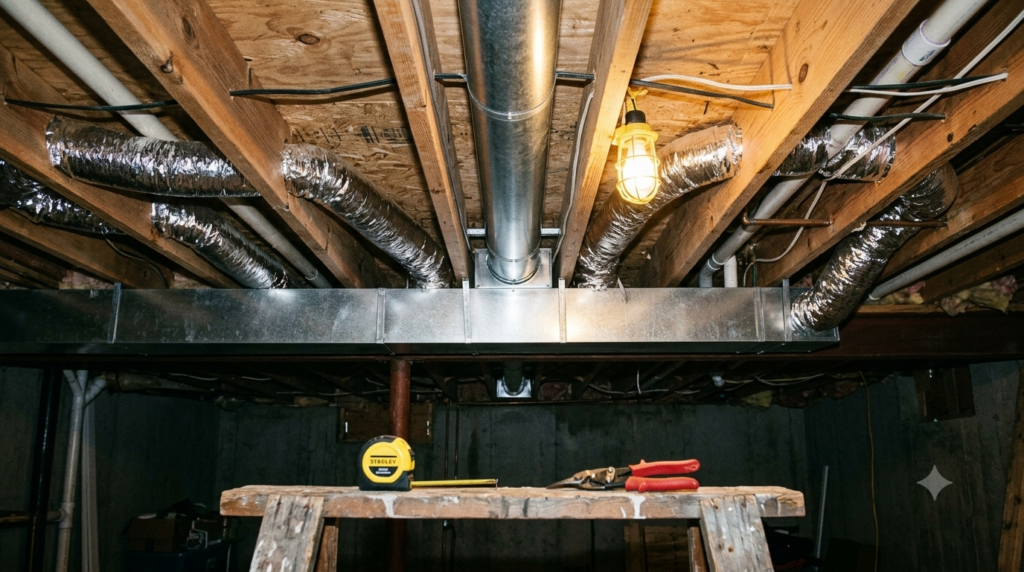
Most residential installations use a combination – sheet metal for the main trunk lines and flex duct for branch runs to individual rooms.
New Installation vs. Replacement
Replacing existing ductwork costs more than installing in new construction. Technicians have to remove old ducts, work around finished walls and ceilings, and often patch drywall or insulation along the way. In new construction, the framing is open and runs are straightforward.
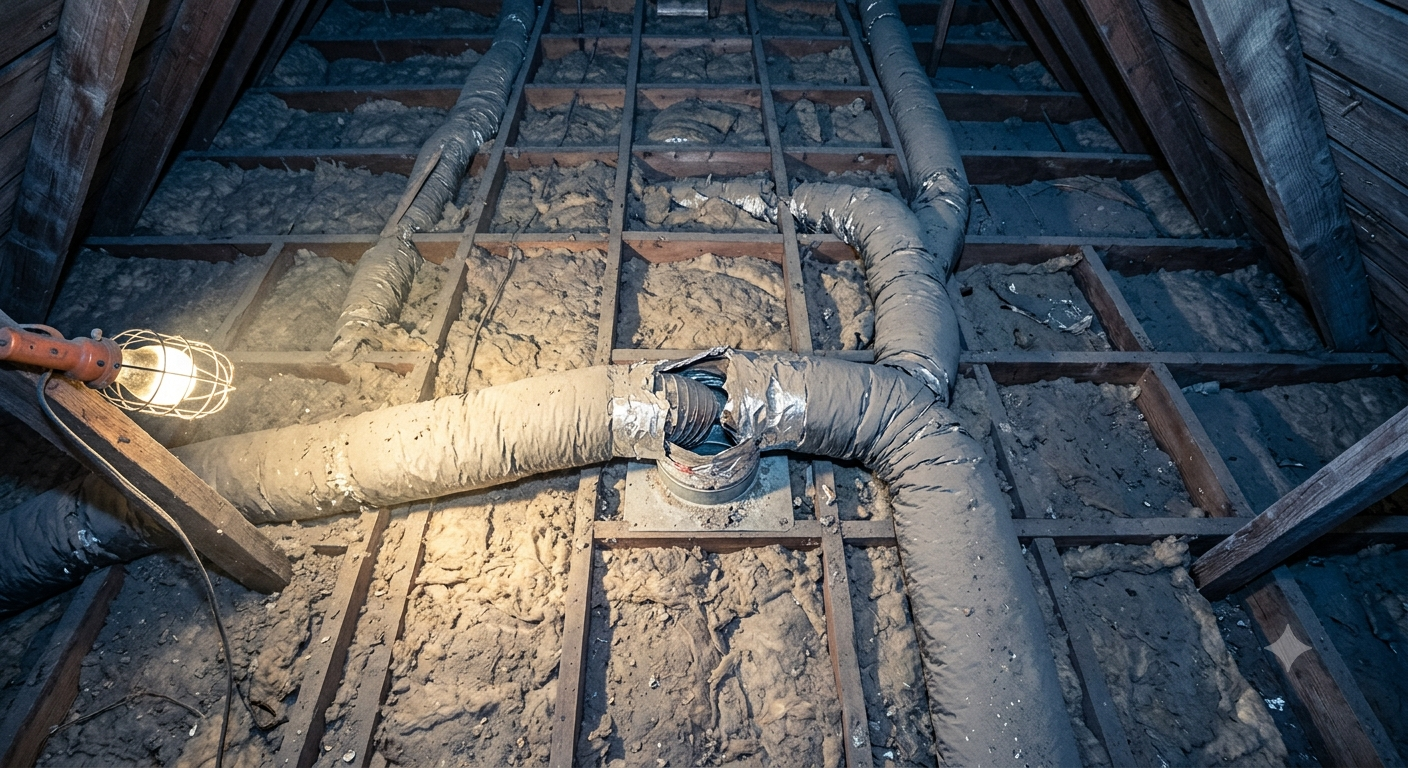
If your home has original ductwork from the 1980s or earlier, replacement is usually the right call. Older ducts tend to leak significantly, lack adequate insulation, and may be sized for equipment that no longer matches what’s in your home.
Accessibility
Attic installations can be straightforward in summer but are a real challenge in winter. Crawl spaces with limited clearance, finished basements, and homes with concrete slab foundations all add labor time. Expect a higher quote when access is difficult.
Zoning Systems
If you want different areas of your home heated and cooled independently – common in larger homes or homes with additions – you’ll need a zoned duct system with dampers and a zone control board. Zoning adds cost upfront but can meaningfully reduce energy use and fix rooms that are consistently too hot or too cold.
Typical Cost Ranges by Project Type
| Project Type | Estimated Cost Range |
|---|---|
| Single duct run (1 room) | $500 – $1,500 |
| Partial replacement (1-2 zones) | $1,500 – $4,000 |
| Full replacement (existing home) | $5,000 – $12,000 |
| New construction installation | $3,000 – $8,000 |
| Commercial ductwork (per project) | $10,000 – $50,000+ |
These are estimates. Your actual quote depends on your home’s layout, the materials specified, and current labor availability in your area.
Labor Costs in Southeast Michigan
HVAC labor in Southeast Michigan typically runs $75 to $150 per hour, depending on the contractor and the complexity of the work. A full duct installation on a 2,000-square-foot home might require 20 to 40 hours of labor spread across two to three days.
Labor is often the largest single cost component – especially on replacement projects, where removal and cleanup add significant time.
Signs You Need New Ductwork
Not every duct system needs full replacement, but there are clear signs that yours may be costing you money:
- Uneven temperatures between rooms despite a functioning furnace or AC
- Higher-than-expected energy bills that don’t match your usage habits
- Visible damage – crushed flex duct, disconnected joints, or sections that have pulled apart
- Excessive dust near registers, which can indicate leaks pulling unconditioned air from attics or crawl spaces
- Age – ducts more than 20 to 25 years old likely don’t meet current efficiency standards
A proper system assessment from a qualified technician can tell you whether repair, sealing, or full replacement makes the most sense.
Duct Sealing vs. Full Replacement
If your ductwork is structurally sound but leaking, sealing is a much cheaper option than replacement. Aeroseal and mastic sealant applications typically cost $1,000 to $3,000 for a whole-home treatment and can reduce leakage significantly.
Full replacement makes more sense when:
- The ducts are undersized for your current equipment
- There’s widespread physical damage or deterioration
- You’re replacing the HVAC system itself and want everything matched properly
- The layout is inefficient and causing chronic comfort problems
How to Get an Accurate Quote
The only reliable way to get a real number is to have a technician walk your home and assess the existing system – or the space where new ducts will go. Be cautious of quotes given over the phone without a site visit. Ductwork pricing depends too much on your specific home to estimate accurately without seeing it.
When comparing quotes, make sure each one specifies:
- Material type and gauge for main trunk lines and branch runs
- Whether removal and disposal of old ductwork is included
- Insulation requirements, especially for attic or crawl space runs
- Any permits required by your local municipality
Michigan building codes require permits for new ductwork installations in most jurisdictions. A reputable contractor will pull the permit – don’t work with anyone who suggests skipping it.
Financing Ductwork Installation
A full duct replacement is a significant expense, and it’s rarely something homeowners budget for in advance. High Comfort offers promotional financing options so you can spread the cost of major HVAC work over time rather than paying everything upfront. When you’re replacing both the equipment and the ductwork in the same project, financing can make the total much easier to manage.
You can learn more about available services and financing at High Comfort’s heating and cooling services page.
FAQs
How long does ductwork installation take?
A full replacement in an existing home typically takes two to three days. New construction installs are often faster since there’s no removal involved and access is easier. Single-room additions or minor repairs are usually done in a few hours.
Does new ductwork increase home value?
It can, particularly if the existing system is visibly deteriorated or the home has documented comfort or efficiency problems. Buyers and home inspectors notice duct condition, and a new system paired with modern HVAC equipment is a legitimate selling point.
Can I install ductwork myself in Michigan?
Homeowners can technically do some of their own HVAC work in Michigan, but ductwork installation requires permits and inspections in most jurisdictions. Improper installation leads to leakage, poor airflow, and added strain on your equipment. Most homeowners are better served by a licensed contractor.
What’s the difference between supply and return ducts?
Supply ducts carry conditioned air from the furnace or air handler to each room. Return ducts pull air back to the system to be reconditioned. A balanced system needs both, sized appropriately for the equipment and the home’s layout.
How often should ductwork be replaced?
Well-installed sheet metal ductwork can last 25 years or more. Flex duct typically has a shorter lifespan – often 15 to 20 years – depending on installation quality and conditions. Age alone isn’t always a reason to replace; condition and performance matter more.
Is duct sealing worth it before replacing the whole system?
If the ducts are in good physical shape and properly sized for your equipment, sealing is almost always worth considering before committing to full replacement. It’s a fraction of the cost and can deliver real efficiency improvements. A technician can assess whether your ducts are good candidates for sealing or whether replacement is the better investment.
What permits are required for ductwork installation in Michigan?
Most Michigan municipalities require a mechanical permit for new ductwork installations. Your contractor should handle the permit application and schedule the required inspections. Always confirm this before work begins.
Getting ductwork right matters just as much as choosing the right furnace or air conditioner. If you’re in Southeast Michigan and want an honest assessment of what your project will actually cost, reach out to High Comfort to schedule a consultation and get a quote based on your specific home.