Michigan winters are not mild. When temperatures in Southeast Michigan drop into the single digits and hold there for days, your heating system stops being a convenience and starts being a necessity. So when aging equipment finally needs to go, the heat pump vs. gas furnace question comes up fast – and it deserves a straight answer.
Both systems work. Both have real advantages. But they perform differently in cold climates, and what makes sense in Georgia or Virginia does not automatically translate to Bloomfield Hills or Royal Oak in January.
Here is what you need to know before making this call.
How Each System Actually Works
Gas Furnaces
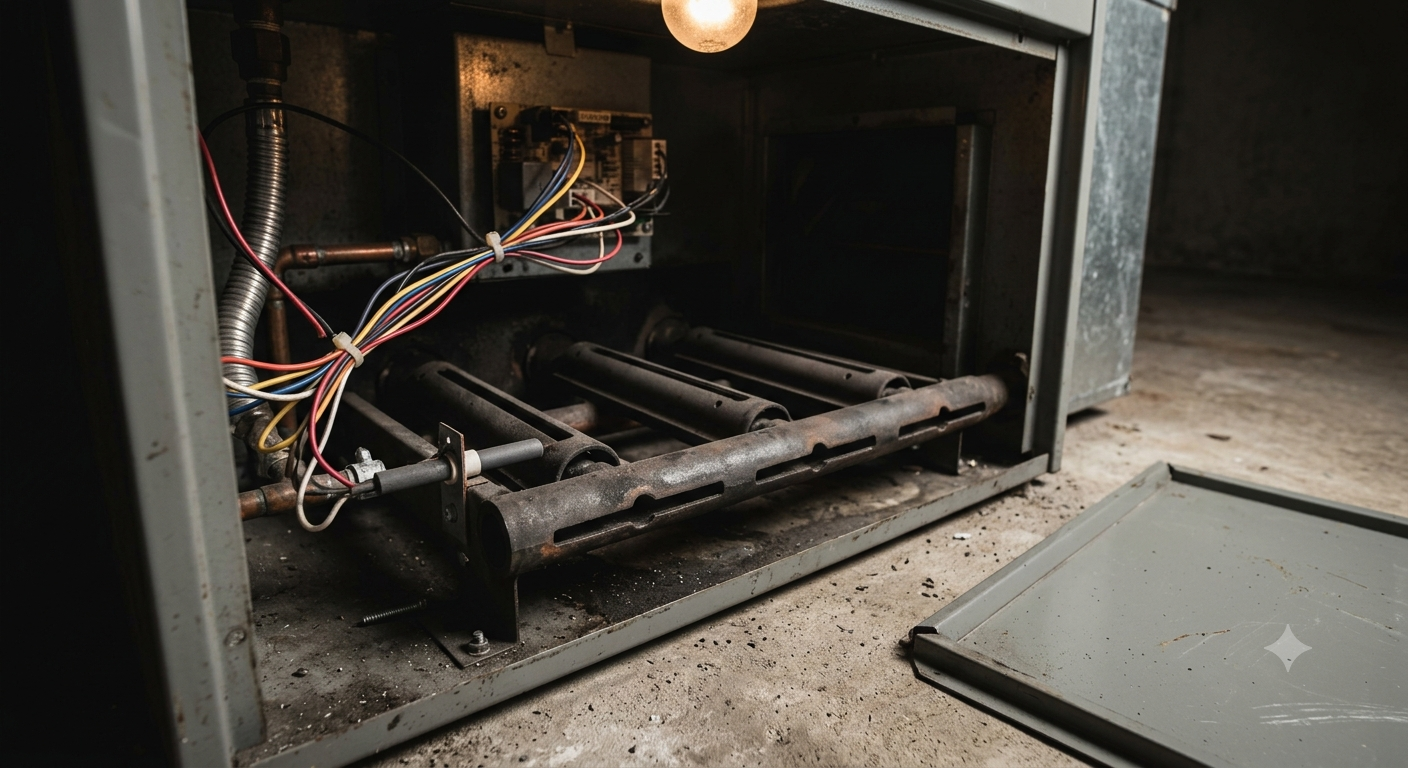
A gas furnace burns natural gas to produce heat, then pushes warm air through your ductwork. The process is direct and fast. Turn up the thermostat on a cold Michigan morning and a furnace responds almost immediately, delivering high-temperature air within minutes.
Furnaces are rated by AFUE – Annual Fuel Utilization Efficiency. A high-efficiency gas furnace can reach 96-98% AFUE, meaning nearly all the fuel burned becomes usable heat. That is a significant jump over older units running at 60-70%.
Heat Pumps
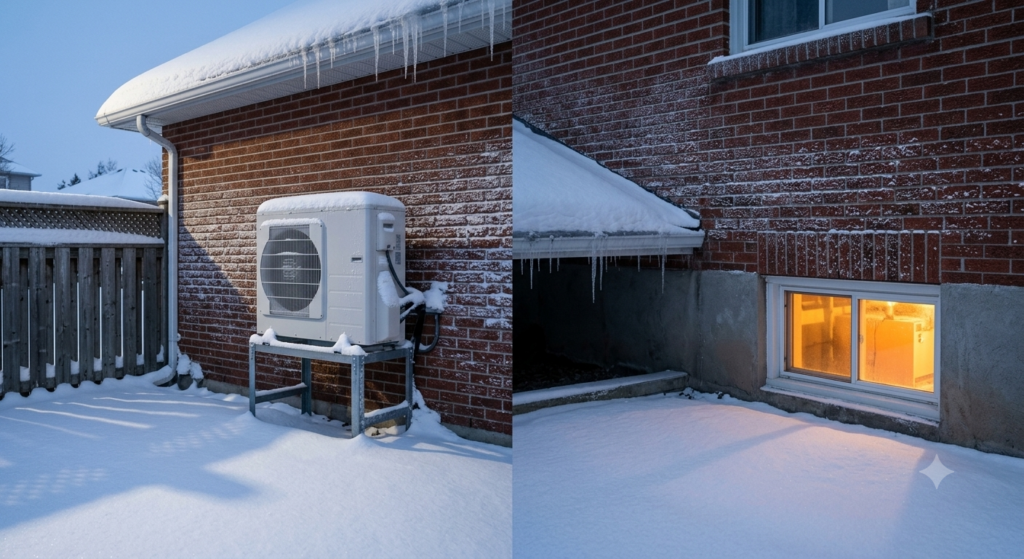
A heat pump does not generate heat by burning anything. It moves heat from outdoor air into your home. Even cold air contains some heat energy, and a heat pump extracts it and transfers it inside.
In summer, the process reverses and the system acts as an air conditioner. That dual function is one of its most practical advantages – one piece of equipment handles both heating and cooling.
Modern cold-climate heat pumps, often called variable-speed or inverter-driven units, can operate efficiently at temperatures well below freezing. Some are rated down to -13°F or lower. That is a meaningful shift from older heat pump technology, which struggled once outdoor temps dropped below 35-40°F.
The Michigan Climate Factor
This is where the conversation gets specific, and it matters.
Michigan winters regularly produce extended stretches below 20°F. Cities like Novi, Southfield, and West Bloomfield can see weeks of temperatures in the teens or single digits. The cold-weather performance gap between older heat pump technology and gas furnaces was real – and for Michigan homeowners, it was a legitimate concern.
The newer generation of cold-climate heat pumps has closed that gap considerably. But there is still a practical reality: at extreme cold, a heat pump works harder to extract heat from outdoor air, its efficiency advantage shrinks, and in some cases a backup electric resistance element kicks in. That backup heat is expensive to run.
A gas furnace, by contrast, delivers consistent, high-output heat regardless of what is happening outside. It does not care whether it is 15°F or -5°F.
For Michigan homeowners, that is not a footnote. It is a central part of the decision.
Comparing the Two Systems Side by Side
| Factor | Gas Furnace | Heat Pump |
|---|---|---|
| Heating performance in extreme cold | Excellent | Good (modern units), reduced at extremes |
| Cooling capability | No (needs separate AC) | Yes, built-in |
| Energy efficiency | High (up to 98% AFUE) | Very high in moderate temps |
| Operating cost | Depends on gas prices | Depends on electricity rates |
| Upfront cost | Moderate | Higher, especially cold-climate models |
| Dual-fuel option | Yes (paired with heat pump) | Yes (paired with gas backup) |
| Lifespan | 15-20 years | 15 years typical |
| Carbon footprint | Higher (burns gas) | Lower (no combustion) |
Operating Costs: Gas vs. Electricity in Michigan
Natural gas prices fluctuate, but gas has historically been a cost-effective fuel for heating in the Midwest. A high-efficiency gas furnace running at 96% AFUE is hard to beat on a per-BTU basis when gas prices are moderate.
Heat pumps are measured differently – by COP (Coefficient of Performance) or HSPF (Heating Seasonal Performance Factor). A heat pump can deliver 2-3 units of heat for every unit of electricity consumed, which sounds impressive. But electricity costs more per unit of energy than natural gas in most Michigan markets, so the math is not as simple as it looks.
In milder stretches, a heat pump will often cost less to operate. During a brutal Michigan cold snap, a gas furnace may come out ahead. Your actual numbers depend on local utility rates and how hard your winters run.
This is exactly why the dual-fuel system has become a popular answer for Michigan homeowners.
The Dual-Fuel Option: The Best of Both
A dual-fuel system pairs a heat pump with a gas furnace as a backup. The heat pump handles heating and cooling during moderate temperatures, where it runs most efficiently. When outdoor temps drop below a set threshold, the system automatically switches to the gas furnace for reliable, high-output heat.
For Southeast Michigan homeowners, this setup is worth serious consideration. You get the efficiency benefits of a heat pump through fall, spring, and mild winter days – plus the dependable performance of a gas furnace when January turns brutal.
The tradeoff is upfront cost. Dual-fuel systems require both pieces of equipment, which means a higher installation investment. Promotional financing can make that more manageable, spreading the cost over time so a full system upgrade does not have to wait for the perfect budget moment.
When a Gas Furnace Makes More Sense
A gas furnace is likely the stronger choice if:
- Your home already has a gas line and ductwork sized for high-output heat
- You want the lowest upfront cost for a heating-only replacement
- Fast, powerful heat delivery on the coldest days is a priority
- You are replacing a furnace mid-winter and need a straightforward swap
Bryant® manufactures high-efficiency gas furnaces that pair well with existing systems and hold up through Michigan winters. As an authorized Bryant® dealer and installer, we can assess your current setup and recommend the right unit for your home.
When a Heat Pump Makes More Sense
A heat pump is likely the stronger choice if:
- You are replacing both your furnace and central air conditioner at the same time
- Your home currently uses electric heat and you want to improve efficiency
- Reducing your home’s carbon footprint is part of the decision
- You want one system to handle heating and cooling year-round
- You are open to a dual-fuel configuration for Michigan’s coldest months
Cold-climate heat pump technology has improved significantly in recent years. For homes in Southeast Michigan suburbs like Birmingham, Berkley, or Clawson, a properly sized modern heat pump can handle a large portion of your annual heating load efficiently.
Questions Worth Answering Before You Decide
What fuel sources does your home already have?
If you have natural gas service, a furnace replacement is simpler. If your home runs on electric only, a heat pump is often the more practical path.
How old is your air conditioner?
If your AC is also aging, replacing both with a heat pump can be more cost-effective than buying two separate systems.
How well is your home insulated?
A well-insulated home in Southfield or West Bloomfield retains heat better, which helps a heat pump perform more efficiently even in cold weather.
What matters more – upfront cost or long-term operating cost?
Heat pumps often cost more to install but can save on operating costs in moderate climates. A gas furnace may have lower upfront costs but higher long-term fuel expenses depending on where gas prices go.
A proper system assessment from a qualified technician is the most reliable way to answer these questions for your specific home.
Getting the Right Answer for Your Home
There is no universal winner in the heat pump vs. gas furnace comparison. The right choice depends on your home’s existing infrastructure, your budget, your comfort priorities, and how you want to handle Michigan’s full range of weather.
What does not change is this: the system needs to be properly sized, correctly installed, and matched to your home. An undersized heat pump in a poorly insulated house will struggle in February. An oversized furnace will short-cycle and wear out faster. Equipment quality and installation quality both matter.
At High Comfort, we serve homeowners across Southeast Michigan – including Birmingham, Bloomfield Hills, Royal Oak, Novi, Southfield, and West Bloomfield. We install and service Bryant® heating systems and can walk you through whether a furnace, heat pump, or dual-fuel setup makes the most sense for your home and budget.
Financing is available for major HVAC purchases, so a full system upgrade does not have to wait for the right moment in your budget cycle.
Contact us to schedule a system assessment and get a clear recommendation for your home.
Frequently Asked Questions
Can a heat pump handle Michigan winters on its own?
Modern cold-climate heat pumps can operate well below freezing, including in the single digits. That said, during Michigan’s most extreme cold stretches, efficiency drops and some units fall back on backup electric resistance heat, which is costly to run. A dual-fuel system that pairs a heat pump with a gas furnace backup is a popular solution for Southeast Michigan homeowners who want efficiency without sacrificing reliability.
Is a gas furnace more efficient than a heat pump?
It depends on how you measure efficiency. A high-efficiency gas furnace converts up to 98% of fuel into usable heat. A heat pump moves heat rather than generating it, delivering 2-3 units of heat per unit of electricity in moderate temperatures. In mild weather, the heat pump typically wins on efficiency. In extreme cold, a gas furnace often has the advantage in both output and operating cost.
What is a dual-fuel heating system?
A dual-fuel system combines a heat pump with a gas furnace. The heat pump handles heating and cooling when outdoor temperatures are moderate, where it runs most efficiently. When temperatures drop below a set point, the system automatically switches to the gas furnace for high-output heat. For Michigan homeowners, this setup balances efficiency and reliability across the full heating season.
How long does a heat pump last compared to a gas furnace?
Gas furnaces typically last 15-20 years with proper maintenance. Heat pumps generally last around 15 years. Because a heat pump runs year-round for both heating and cooling, it accumulates more operating hours than a furnace that only runs in winter. Annual maintenance helps extend the life of both systems.
Does it cost more to install a heat pump than a gas furnace?
Generally, yes. Cold-climate heat pumps suited for Michigan winters carry a higher upfront cost than a standard gas furnace replacement. If you are also replacing your air conditioner, the comparison shifts – a heat pump handles both functions, which changes the value equation. Promotional financing can make a heat pump or dual-fuel upgrade more accessible without waiting to save the full amount upfront.
Should I replace my furnace with a heat pump if my home already has gas?
Having natural gas service does not prevent you from installing a heat pump, but it does mean the infrastructure for a gas furnace is already in place. If your air conditioner also needs replacement, a heat pump or dual-fuel system may be worth the investment. If you only need a furnace replacement and your AC is in good shape, a high-efficiency gas furnace is often the more straightforward and cost-effective choice.
How do I know which system is right for my home in Southeast Michigan?
The best way is a professional assessment. A technician can evaluate your home’s size, insulation, ductwork, current equipment, and utility setup to give you a specific recommendation. General comparisons are useful for research, but the right answer for a home in Royal Oak may look different from the right answer for a home in Novi or Bloomfield Hills.