If you manage or own a commercial building in Southeast Michigan, your HVAC system is one of the most critical pieces of infrastructure on the property. And for many commercial buildings, that system lives on the roof.
Rooftop HVAC units are the standard choice for offices, retail spaces, warehouses, restaurants, and light industrial facilities. They keep conditioned air moving through your building without consuming interior square footage, and they make maintenance access straightforward. But installing and servicing them correctly takes a different level of expertise than residential work.
Here is what you need to know about rooftop units, how installation works in Michigan, and what to look for in a service provider.
What Is a Rooftop HVAC Unit?
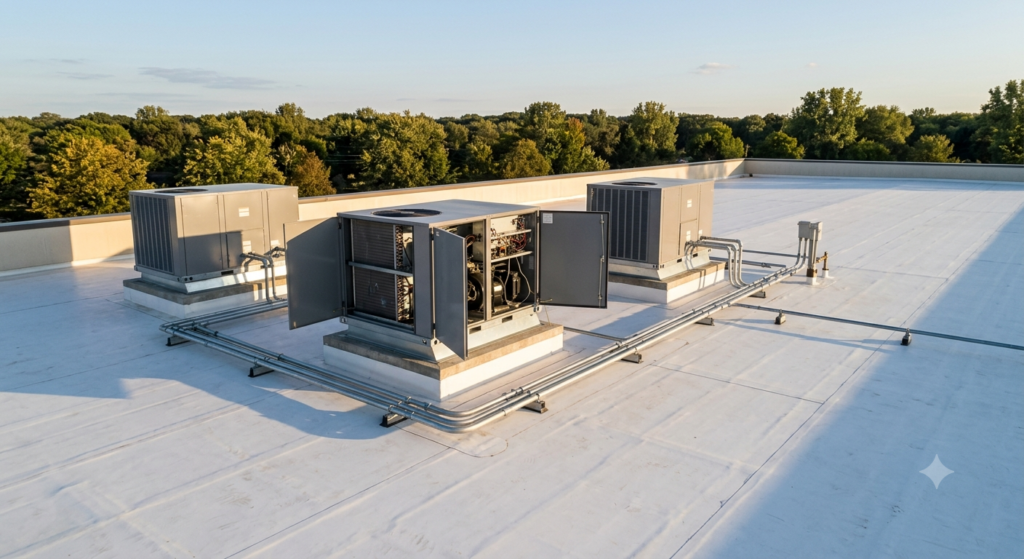
A rooftop HVAC unit, commonly called an RTU, is a self-contained system that handles heating, cooling, and sometimes ventilation from a single cabinet mounted on the roof. All the major components – compressor, condenser, evaporator, and air handler – are packaged together in one unit.
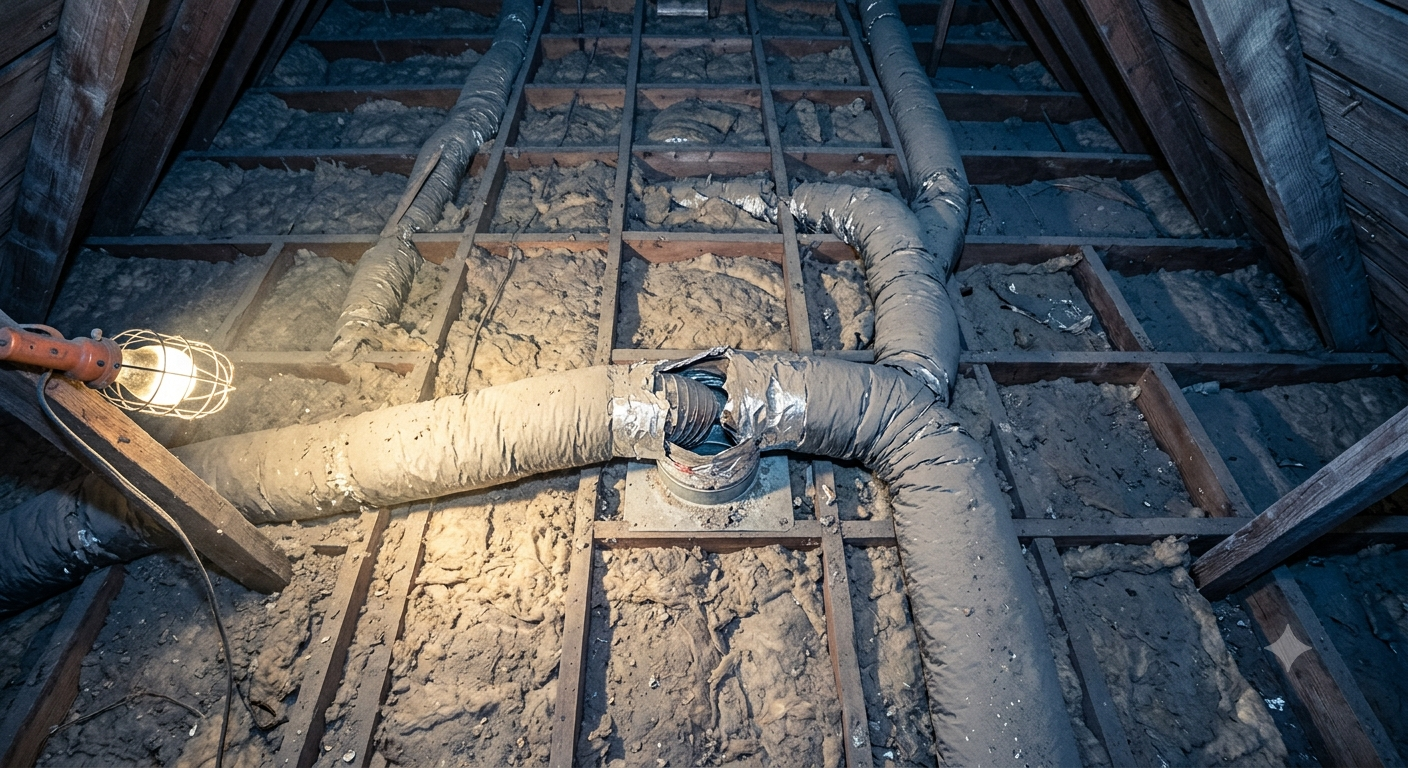
Ductwork runs from the unit down through the roof deck and distributes conditioned air throughout the building. Because everything is housed in one cabinet and located outside, the unit does not take up any interior floor or mechanical room space.
RTUs range from small single-zone units for a 1,500-square-foot retail suite to large multi-zone systems serving tens of thousands of square feet. They can run on natural gas, electricity, or a combination of both.
Why Commercial Buildings in Michigan Use Rooftop Units
Michigan’s climate puts real demands on commercial HVAC. Winters are cold and long. Summers bring heat and humidity. A system that handles both efficiently – and holds up through freeze-thaw cycles – is not optional.
Rooftop units are popular here for several practical reasons:
- Space efficiency. Flat and low-slope commercial roofs are common in Michigan, giving you a ready platform for RTUs without giving up interior space.
- Easier service access. Technicians can reach the unit without entering the building, which keeps disruption to your operations minimal.
- Scalability. You can add units as a building expands or tenant needs change, without major structural work.
- Separation from occupied space. Noise and mechanical activity stay on the roof, away from employees and customers.
For warehouses, strip malls, and office buildings throughout Southeast Michigan, RTUs are often the most practical and cost-effective solution.
How Commercial Rooftop HVAC Installation Works
Installing a rooftop unit is not a job for a general contractor or a residential HVAC company. It involves structural considerations, electrical work, ductwork design, refrigerant handling, and code compliance.
Site and Load Assessment
Before any equipment is ordered, a qualified technician needs to assess your building. That means a Manual N commercial load calculation to determine the right unit size, an evaluation of the roof structure to confirm it can support the unit’s weight, and a review of existing ductwork if you are replacing an older system.
Undersizing a unit means it will run constantly and still struggle to maintain comfort. Oversizing leads to short cycling, humidity problems, and premature wear. Getting this step right is the foundation of everything that follows.
Equipment Selection
RTUs come in a wide range of configurations. Key decisions include:
- Heating source. Gas/electric units are common in Michigan because natural gas is widely available and cost-effective for heating.
- Efficiency ratings. Higher-efficiency units cost more upfront but reduce operating costs over time – which matters for buildings running HVAC year-round.
- Controls and zoning. Modern RTUs can integrate with building automation systems and support multiple zones, giving you better control over comfort and energy use.
- Economizer options. An economizer lets the unit pull in outside air for cooling when conditions allow, cutting down on mechanical cooling hours.
Structural and Roof Preparation
The roof curb – the frame that supports the unit and creates a weathertight seal – must be installed correctly. This involves cutting through the roof deck for ductwork penetrations, setting the curb to manufacturer specifications, and ensuring proper flashing and waterproofing. A failed roof seal around an RTU is one of the more common sources of water damage in commercial buildings.
Crane Placement
Most commercial RTUs are heavy enough to require a crane for placement. Coordinating crane access, managing traffic or parking, and timing the lift properly are all part of a professional installation.
Startup and Commissioning
Once the unit is in place and connected, a qualified technician runs a full commissioning process – verifying refrigerant charge, checking electrical connections, testing controls and safeties, and confirming airflow through all zones. Commissioning is not optional. It is what separates a system that performs correctly from one that fails early.
Maintaining a Commercial Rooftop Unit in Michigan
Michigan weather is hard on rooftop equipment. Ice, snow, freeze-thaw cycles, and summer heat all take a toll. A preventive maintenance program is the most reliable way to extend equipment life and avoid emergency breakdowns.
What Regular Maintenance Covers
A thorough commercial RTU maintenance visit typically includes:
- Inspecting and replacing air filters
- Cleaning evaporator and condenser coils
- Checking refrigerant levels and looking for leaks
- Inspecting electrical connections and controls
- Lubricating moving parts
- Checking the economizer damper and controls
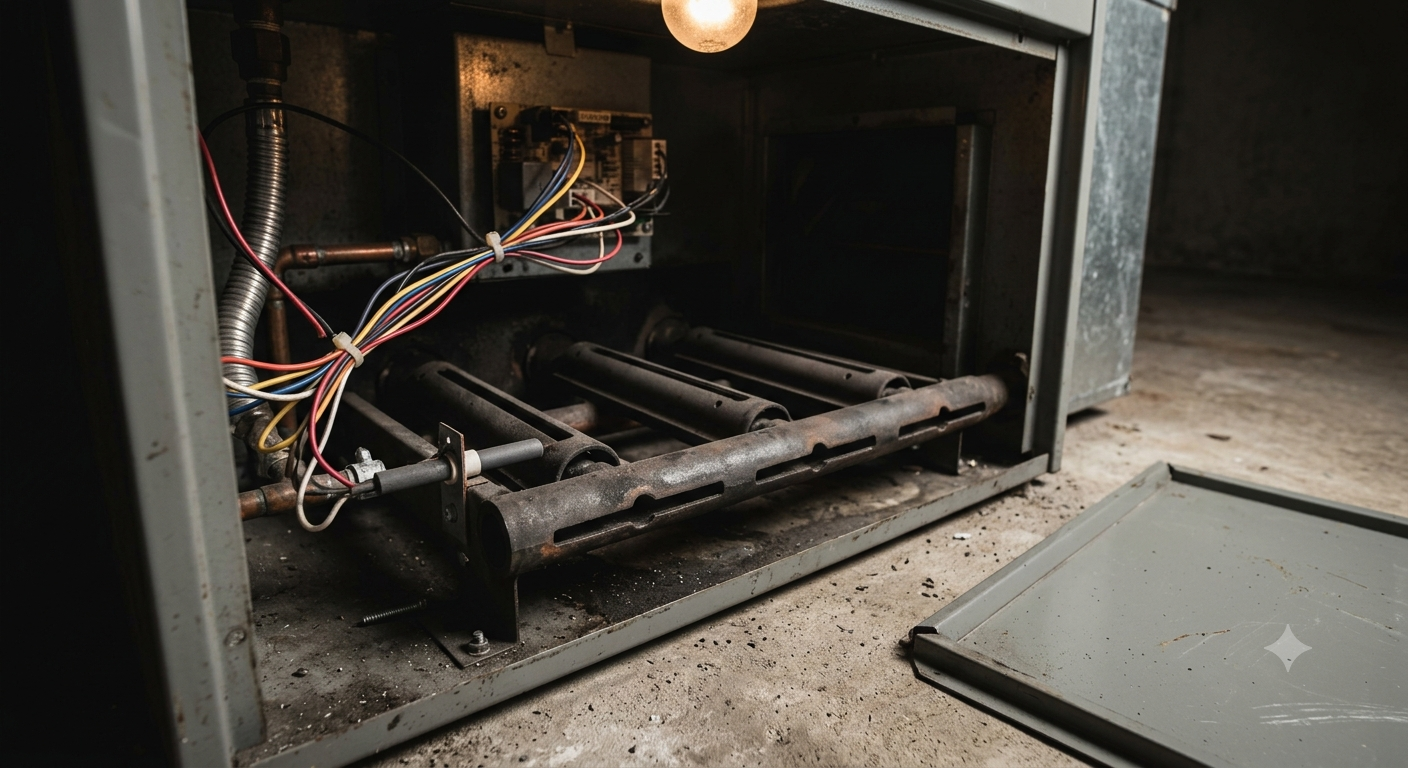
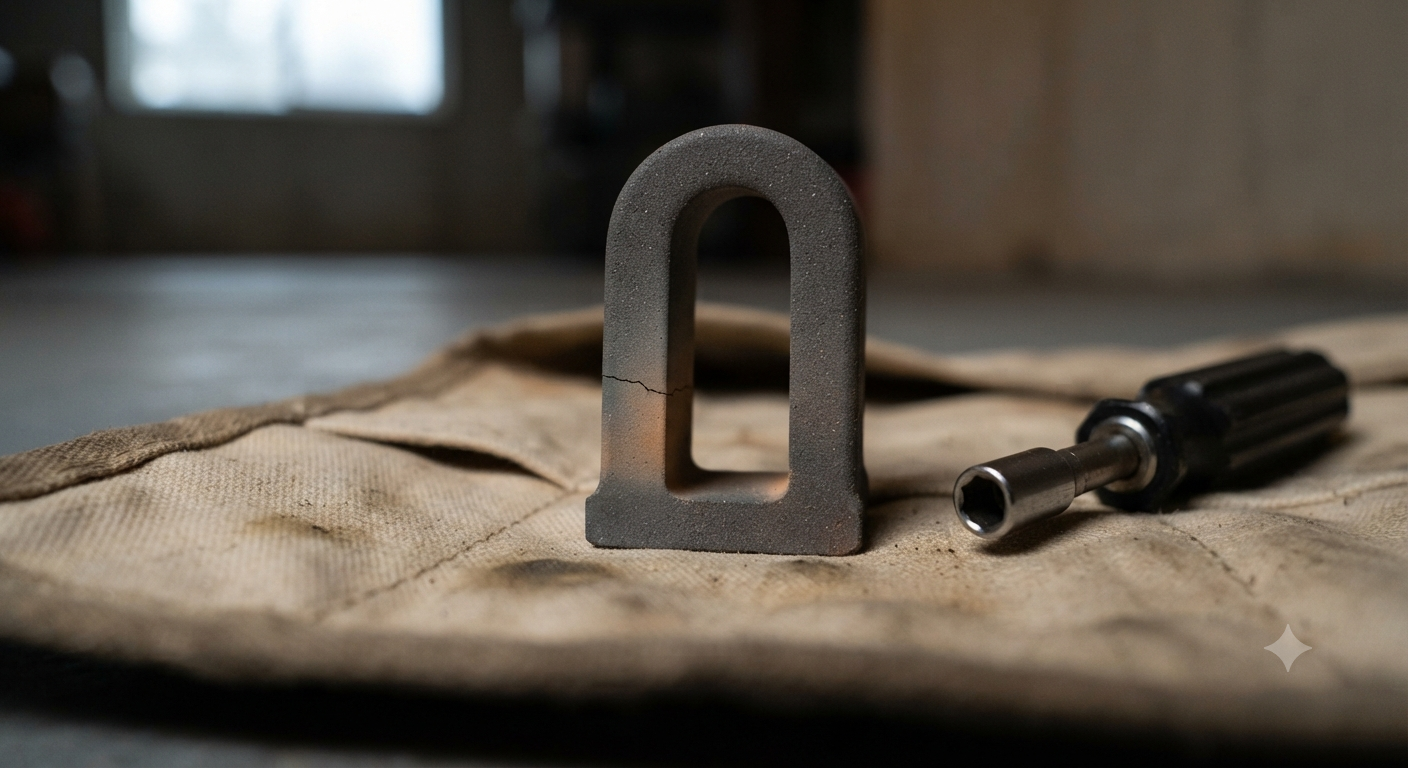
- Inspecting the heat exchanger for cracks (critical for gas units)
- Clearing drain pans and condensate lines
- Verifying startup and shutdown sequences
Most commercial buildings benefit from at least two service visits per year – one in spring before cooling season and one in fall before heating season.
Signs Your Rooftop Unit Needs Service
Do not wait for a full breakdown to call a technician. Watch for:
- Uneven temperatures across zones
- Unusual noises coming from the unit
- Higher energy bills without any change in usage
- Ice forming on the unit during cooling season
- Visible rust, corrosion, or physical damage to the cabinet
- Frequent short cycling – the unit turning on and off rapidly
Catching problems early is almost always cheaper than emergency repairs or premature replacement.
Rooftop Unit Replacement: When to Replace vs. Repair
Commercial RTUs typically last 15 to 20 years with proper maintenance. As a unit approaches the end of its service life, the repair-versus-replace decision comes up more often and gets more expensive each time.
Consider replacement when:
- Repair costs exceed 50 percent of the cost of a new unit
- The unit uses R-22 refrigerant, which is no longer manufactured and increasingly costly to service
- Efficiency has declined and energy costs are climbing
- The unit is experiencing repeated failures across multiple components
- Your building’s needs have changed and the existing unit no longer fits the load
A new unit also gives you access to better controls, higher efficiency ratings, and current warranty coverage.
Working with a Commercial HVAC Provider in Michigan
Not every HVAC company is set up for commercial rooftop work. When evaluating providers, look for:
- Hands-on experience with commercial RTU installation and service
- Familiarity with the major equipment brands used in your region
- Proper licensing and insurance for commercial work in Michigan
- The ability to handle crane coordination and structural requirements
- A clear commissioning and startup process
- Ongoing maintenance agreements, not just one-time service calls
High Comfort serves commercial clients across Southeast Michigan with heating, cooling, and refrigeration services. If you are managing a commercial property and need a rooftop unit assessed, installed, or serviced, the team can walk you through your options and provide a full system evaluation.
Financing options are also available for major equipment purchases, which can make a full RTU replacement more manageable without putting off a necessary upgrade.
FAQs: Rooftop HVAC Units for Commercial Buildings
What is the average lifespan of a commercial rooftop HVAC unit?
With regular maintenance, most commercial RTUs last between 15 and 20 years. Units that are poorly maintained or improperly sized tend to fail earlier – sometimes within 10 years.
How long does it take to install a commercial rooftop unit?
A straightforward replacement on an existing curb can often be completed in a single day. New installations that require ductwork modifications, new curb fabrication, or significant electrical work may take two to three days or longer, depending on the complexity of the building.
Do rooftop HVAC units work well in Michigan winters?
Yes. Gas/electric RTUs are well suited to Michigan’s cold winters. The gas heat exchanger provides reliable heating even at very low temperatures. Proper unit selection and sizing for the local climate is important, and a qualified technician should account for Michigan’s heating load when specifying equipment.
How often should a commercial rooftop unit be serviced?
Most commercial buildings should schedule maintenance twice per year – once before cooling season in spring and once before heating season in fall. High-use facilities or older equipment may benefit from more frequent inspections.
What size rooftop unit does my commercial building need?
Size depends on your building’s square footage, insulation, occupancy, internal heat loads, and local climate. A proper Manual N commercial load calculation is the only reliable way to determine the right size. Rules of thumb lead to systems that are too large or too small.
Can a rooftop unit handle both heating and cooling?
Yes. Most commercial RTUs are packaged systems that handle both in a single cabinet. Gas/electric units use a gas furnace section for heating and a refrigerant-based system for cooling, making them a complete year-round solution.
What happens if a rooftop unit is not properly commissioned after installation?
Skipping commissioning often creates problems that are not immediately obvious but cause long-term damage – incorrect refrigerant charge, improper airflow, controls that do not function as designed, and safeties that were never tested. These issues shorten equipment life and can result in comfort complaints or energy waste from day one.
Rooftop HVAC units are reliable, practical systems for commercial buildings, but they require the right installation, the right sizing, and consistent service to perform well. In Southeast Michigan, where the climate pushes heating and cooling systems hard year-round, working with a provider who understands commercial RTU work makes a real difference. Reach out to High Comfort to schedule a consultation for your building.