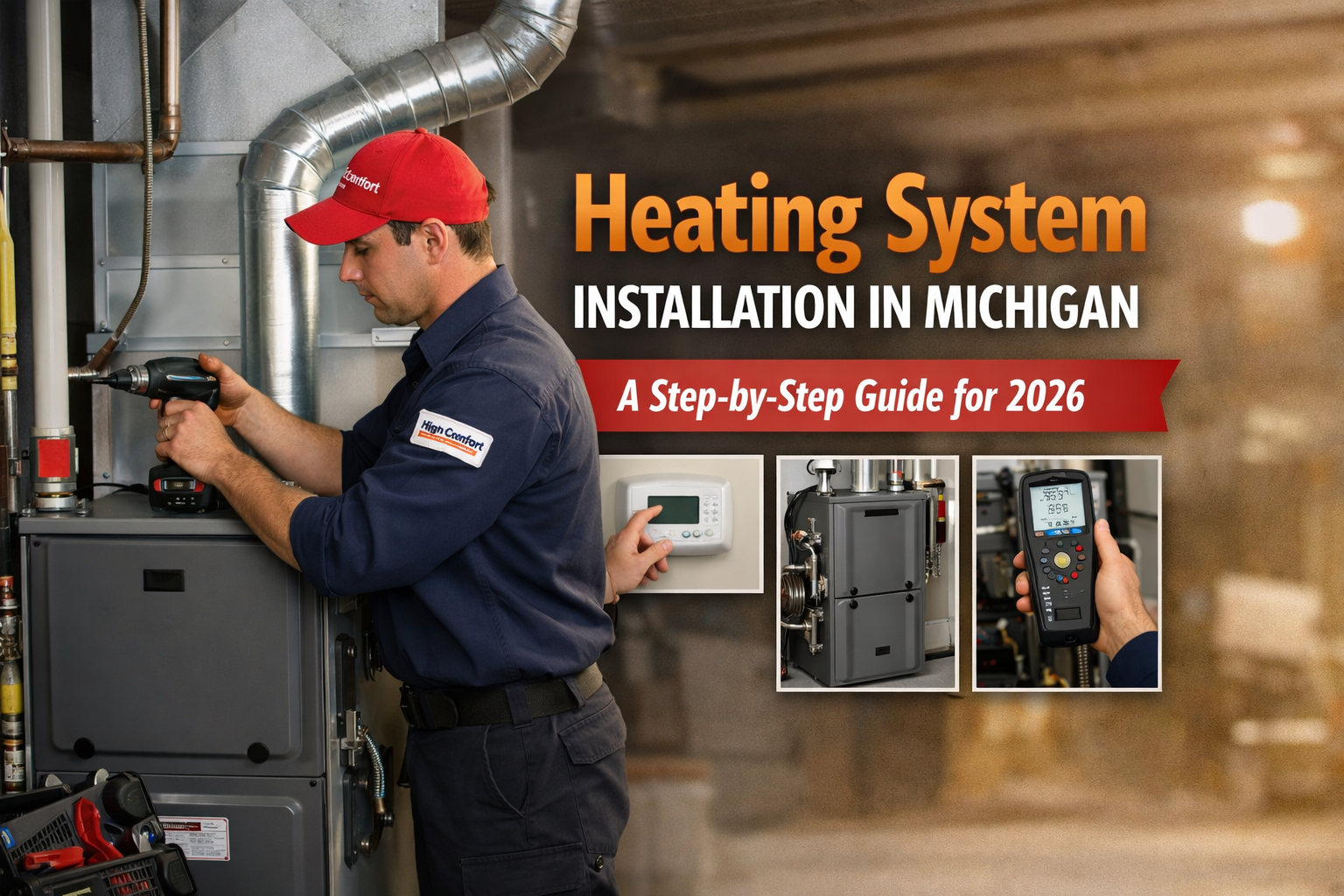
Michigan winters are not gentle. If you live in Birmingham, Bloomfield Hills, or anywhere across Southeast Michigan, you already know what it means when the furnace starts making that noise in January. Or stops making any noise at all.
Whether your current system has finally given out or you’re planning ahead before the cold hits, understanding how heating system installation actually works helps you make a smarter decision. This guide walks you through every step — from choosing the right system to what happens on installation day and beyond.
Why Michigan Homes Need the Right Heating System
Southeast Michigan winters regularly push temperatures below freezing for weeks at a stretch. A system that performs fine in a milder climate can be undersized or inefficient here.
The right fit depends on your square footage, existing ductwork, insulation quality, and how you use the space. Getting that match right from the start saves you money on energy bills and repairs for years to come.
Step 1: Assess Your Current Setup
Before anything gets installed, a qualified technician needs to evaluate what you already have.
That assessment covers:
- The age and condition of your existing furnace or boiler
- Ductwork condition and sizing
- Insulation levels throughout the home
- Your current fuel source — natural gas, electric, or propane
- Hot or cold spots that suggest airflow problems
This step isn’t optional. Skip it and you risk equipment that’s the wrong size — a system that short-cycles, wears out faster, and costs more to run every month.
Step 2: Choose the Right System Type
Several heating system types are commonly installed in Southeast Michigan homes. Here’s a plain-language breakdown of each.
Gas Furnace
The most common choice in Michigan. Gas furnaces heat air quickly, work well with existing ductwork, and are relatively affordable to operate when natural gas prices are stable. They’re well-suited to the demands of a Michigan winter.
Heat Pump
Heat pumps move heat rather than generate it, which makes them highly efficient in moderate temperatures. In Michigan, though, a heat pump typically needs a backup heating source for the coldest months. That’s why dual-fuel systems — a heat pump paired with a gas furnace — have grown in popularity here.
Ductless Mini-Split
No ductwork in your home? Adding an addition or finishing a basement? A ductless system is worth a close look. These units install without any duct modifications and give you room-by-room temperature control.
Boiler
Older homes in Royal Oak or Southfield sometimes run on hot water or steam boiler systems. Replacing a boiler requires a technician who knows that equipment well — it’s not interchangeable with standard furnace work.
Step 3: Select the Equipment
Once you’ve settled on the system type, the next decision is the equipment itself.
For gas furnaces, pay attention to the AFUE rating — Annual Fuel Utilization Efficiency. A higher AFUE means more of the fuel you’re paying for actually heats your home rather than escaping through the flue.
If you’re installing a Bryant® system, you’re working with equipment built for reliability in demanding climates. As an authorized Bryant® dealer and installer, High Comfort can match the right Bryant® model to your home’s specific needs — square footage, existing infrastructure, and all.
Brand matters because it affects parts availability, warranty coverage, and long-term serviceability. Choosing an authorized dealer to install the brand you select protects your investment from day one.
Step 4: Handle Permits and Code Requirements
In Michigan, heating system installation requires a permit in most municipalities. This isn’t a formality worth skipping.
Permits ensure the work is inspected and meets current building codes. For homeowners in West Bloomfield, Novi, or Clawson, local inspection requirements may vary slightly — but the principle is the same. Permitted work protects you when it comes time to sell the home and keeps your homeowner’s insurance valid.
A reputable HVAC contractor pulls the permit for you and schedules the inspection. If a contractor suggests skipping this step, that’s your cue to find a different contractor.
Step 5: Prepare the Installation Space
A little preparation before the technician arrives makes the day go much smoother.
- Clear the area around your furnace or mechanical room
- Make sure the technician has access to your electrical panel
- Know where your gas shutoff is located
- Keep pets and children away from the work area
Most residential furnace installations take four to eight hours depending on complexity. If ductwork modifications are needed, plan for a longer day.
Step 6: The Installation Day
Here’s what a professional heating system installation actually involves:
Removal of the old system. The existing furnace or boiler is disconnected, drained if applicable, and removed from the space.
Ductwork inspection and modification. The technician checks that existing ducts are properly sized for the new equipment, seals any leaks, and fabricates new connections on-site if the system requires them.
Equipment placement and mounting. The new unit is positioned, leveled, and secured. Clearances from walls and combustibles are verified against manufacturer specs and local code.
Gas and electrical connections. All fuel and electrical connections are made by licensed technicians. Gas lines are pressure-tested before the system is started.
Flue and venting. Proper venting is critical for both safety and efficiency. High-efficiency furnaces often use PVC pipe venting rather than traditional metal flues, and the routing needs to meet code.
Thermostat wiring and calibration. If you’re upgrading to a smart thermostat, this is when it gets wired and configured.
System startup and testing. The technician fires up the system, checks for proper ignition, monitors airflow, and confirms that heat is reaching all registers evenly.
Walkthrough with you. Before leaving, a good technician walks you through the new system — shows you the filter location, explains the thermostat, and answers your questions.
Step 7: Schedule Your First Maintenance Visit
A new system still needs regular attention to perform well over its lifespan.
Annual pre-season maintenance check-ups catch small issues before they turn into expensive ones. In Michigan, early fall is the ideal window — before you’re depending on the system every day. A tune-up at that point means you head into winter with a system that’s been inspected, cleaned, and confirmed ready to go.
When your installation is complete, ask about scheduling a maintenance visit for the following fall. It’s the simplest way to protect your new investment.
What About the Cost?
Heating system installation is a significant purchase. The total depends on the system type, equipment model, ductwork condition, and any code-required modifications.
That said, major HVAC purchases don’t have to wait or strain your budget. Promotional financing is available for qualifying installations, which means you can get the right system for your home now and spread the cost over time. Ask about current financing options when you schedule your consultation.
Choosing the Right Installer in Southeast Michigan
The equipment is only part of the equation. The installer matters just as much.
Look for a contractor who:
- Pulls permits and schedules inspections
- Performs a proper load calculation before recommending equipment size
- Is an authorized dealer for the brand they’re installing
- Communicates clearly about what the job involves and what it costs
- Has a real track record in your area
High Comfort serves homeowners across Berkley, Birmingham, Bloomfield Hills, Beverly Hills, Bingham Farms, Clawson, Novi, Royal Oak, Southfield, West Bloomfield, and the surrounding Southeast Michigan communities. As an authorized Bryant® dealer, the company installs equipment backed by strong manufacturer warranties — and provides the kind of clear, direct communication that makes a stressful situation a lot easier to get through.
Ready to move forward? Contact High Comfort to schedule a system assessment and find out which heating system is the right fit for your home.
Frequently Asked Questions
How long does a heating system installation take in Michigan?
Most residential furnace installations take four to eight hours. Ductwork modifications or a boiler replacement can push that timeline longer. Your technician should give you a realistic estimate before work begins.
Do I need a permit to replace my furnace in Michigan?
Yes, in most Michigan municipalities a permit is required. A licensed contractor will pull it and coordinate the inspection. Permitted work protects your home’s resale value and keeps your insurance coverage intact.
What size furnace do I need for my home?
Size depends on your square footage, insulation, window area, ceiling height, and local climate. A proper load calculation is the only accurate way to determine the right fit. Both oversized and undersized systems cause problems — don’t skip this step.
Is a heat pump a good choice for Southeast Michigan winters?
A heat pump alone may not be enough for Michigan’s coldest stretches. Many homeowners here opt for a dual-fuel system — a heat pump paired with a gas furnace — using the heat pump for efficiency in milder temperatures and switching to gas when it gets very cold.
How often should I schedule maintenance after a new installation?
Once a year is the standard. Scheduling a pre-season check-up in early fall gets your system ready for winter and catches any issues before you need the heat most.
Can I finance a new heating system installation?
Yes. Promotional financing is available for qualifying major HVAC purchases, so you can get the right system installed now without paying the full cost upfront. Ask about current financing terms when you contact High Comfort for a consultation.
How do I know when it’s time to replace rather than repair my furnace?
A common guideline: if the repair cost exceeds half the value of a new system and your furnace is more than 15 years old, replacement is usually the smarter investment. A technician can assess your specific situation and give you an honest recommendation either way.